Plumbing tape is cheap, easy to find and used on millions of threaded joints. That makes it a natural first reach when something drips. The trouble is that two very different products share the shelf: thread seal tape, which seals threads, and wrap tapes that are meant only as a short-term patch.
Knowing which one you have and where it belongs saves a lot of frustration. This guide separates the uses, gives wrapping steps for threaded joints, and lists the leaks where tape only delays the real fix.
Thread seal tape, pipe dope and wrap tape compared.
These three products look similar on a shelf but do different jobs.
| Product | Where it belongs | Where it does not. |
|---|---|---|
| Thread seal tape (PTFE, white) | Tapered pipe threads on water fittings, such as a hose bib nipple or a threaded adapter | Compression fittings, flare fittings, the rubber washer of a faucet supply line. |
| Pipe joint compound (dope) | Tapered threads, often for stubborn joints or where a paste seal is preferred | Joints where the manufacturer says not to use it, such as some plastic fittings. |
| Self-fusing silicone wrap | A temporary wrap to slow a pinhole on a pipe while you arrange repair | Any permanent repair, a pressurized hot line, or a split pipe. |
| Gas-rated yellow tape or compound | Gas fittings, by a qualified installer only | Never substitute white water tape on a gas line. |
If the package does not name the use, check the manufacturer's directions before buying.
How to wrap threaded joints correctly.
Wrap tape around male threads only, starting at the second thread from the end so no loose strip falls into the pipe. Turn in the direction the fitting will tighten, which is clockwise looking at the end of the pipe, and overlap each turn. Check the package for the recommended wrap count, which is usually a few snug turns. Dense stacks of tape can crack a female fitting and cause a new leak.
Thread the fitting on by hand first, then snug it with a wrench. Over-tightening splits plastic and strips brass. If the joint still weeps after a proper wrap and reassembly, the threads or the fitting itself may be damaged and worth replacing.
Orem, UT: why a small drip is worth stopping
The city bills culinary water on an increasing tiered structure that dates to 2016. A steady drip adds to total usage, and more usage can push a household into a higher tier, so even small leaks carry a cost beyond the wasted water. Note the meter reading with every fixture off, wait an hour, and read it again. A change means water is leaking somewhere on your side of the meter.
The city also runs a Leak Detection Program and a Water Main and Galvanized Service Line Replacement Program, and the 2022 conservation plan notes that older meters were being replaced with automated metering. Those programs address the city's side of the system. Your plumbing starts at your own side of the meter, so a leak inside the house or in the yard line is yours to chase, and tape will not reach it.
Where tape does not belong.
Compression fittings, such as the nut on a faucet supply line or the shutoff valve stem, seal by squeezing a washer or ferrule, not by threads. Tape in these places can prevent the seal from seating properly. If one of these joints leaks, the fix is usually a new washer, ferrule or connector, which is a standard part of faucet repair.
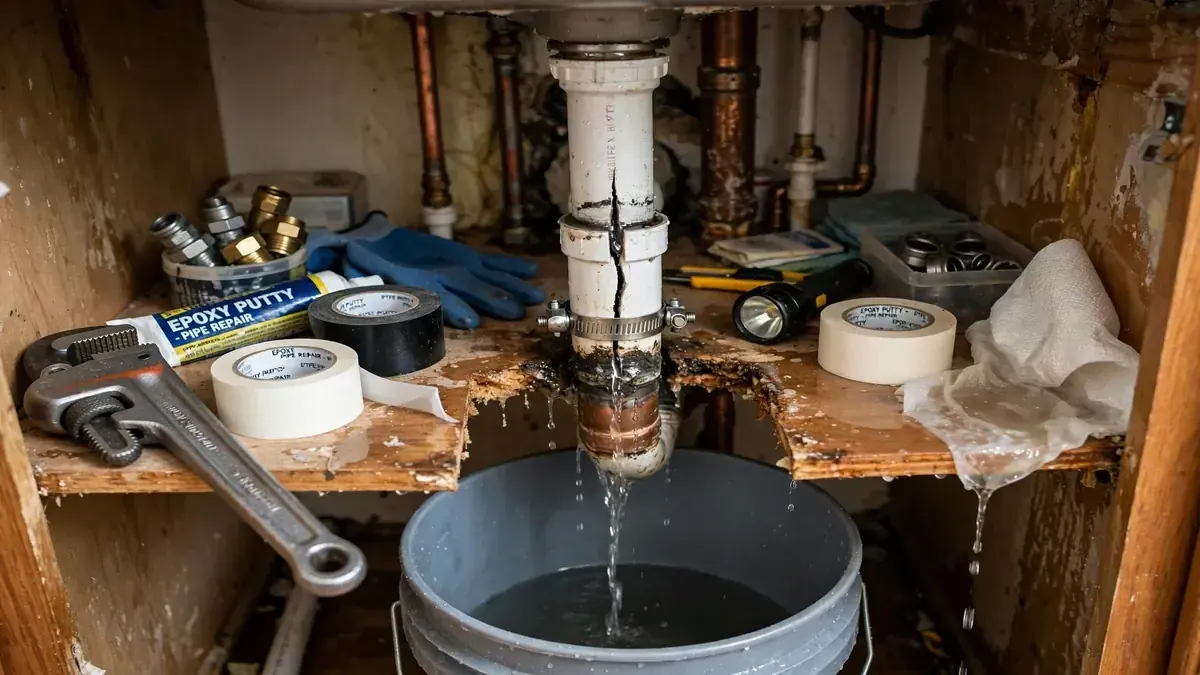
Tape also does not repair a crack, a pinhole in a pipe wall, a failing solder joint or a corroded valve body. Wrapping the outside of a leaking pipe hides water and keeps the problem moist, which speeds corrosion and can soak drywall and insulation behind it.
Not sure whether tape will hold? Call and describe the leak to a licensed plumber.
Call (385) 488-1892.Stop and call right away if you see these.
If water is spraying or pooling, close the shutoff at the fixture or the main valve. Keep everyone out of wet areas near outlets and appliances. The only electrical step to consider is switching power off at the panel, and only if the panel is dry and you can reach it safely.
A leak you cannot see, such as a wet ceiling, a spinning water meter with every fixture off, or a damp patch on a slab, needs a locating method, not tape. Ask which method the technician will bring when you call, since leak detection crews use acoustic listening equipment, thermal imaging, tracer gas and pipe locators. If you smell gas, leave the building and call the gas utility or 911 first.
Before you reach for tape.
A minute of checking often finds the real cause.
- Dry the joint, then press a paper towel to it to find exactly where water emerges.
- Identify the fitting type: tapered thread, compression, flare or soldered.
- Tighten gently a quarter turn and see if the weep stops before taking anything apart.
- Check the washer or O-ring inside the fitting for flattening or cracks.
- Note the age and material of the pipe: copper, galvanized, plastic or PEX.
- Take a photo and a short video of the leak for the plumber.
A tape patch is a bridge, not a repair.
If you use a wrap as a stopgap, treat it as a way to get through the night. Shut off the water to the line if you can, and plan the real repair for the next available slot. A wrapped pinhole in a hot line or a pipe under pressure can fail without warning.
The same trade-off applies to a homeowner in American Fork or Vineyard. Tape buys time, but the pipe underneath still needs a real repair.
Common questions
A few snug wraps in the direction the fitting tightens is typical. Follow the manufacturer's directions on the package and avoid stacking dense layers.
No. Gas fittings need gas-rated products installed by a qualified person. If you smell gas, leave the building and call the gas utility or 911 first.
Not permanently. Wrap tapes can slow a small leak briefly, but a crack, pinhole or corroded section needs a real repair.
Most homeowners policies pay for a sudden burst but not for a drip that went on for months, so the date you first noticed it can matter. Read your own policy and photograph the leak early.
Turn off every fixture and watch the meter or its leak indicator. If it moves, call a plumber to locate the leak. The city's water division can help with questions about the meter itself.
Sources and references
- City of Orem Water Conservation Plan, October 2022 (Utah Division of Water Resources), https://conservewater.utah.gov.
- City of Orem adopted codes list, as of July 1, 2023, https://www.orem.org (2021 International Plumbing Code (IPC) with Utah amendments).
- City of Orem Building Safety Division permit page, https://www.orem.org.
- Utah Division of Occupational and Professional Licensing license verification, https://secure.utah.gov/llv/search/index.html.
- Orem tiered rate structure (adopted 2016), Leak Detection Program, Galvanized Service Line Replacement Program and AMI meter replacement: City of Orem Water Conservation Plan, October 2022, https://conservewater.utah.gov.
- Tape types and wrapping direction are general trade practice and defer to product packaging.