Published by Orem 24/7 Plumbing, a dispatch service in Orem, UT. Page published October 23, 2026.
A broken sewer line that is backing up sewage, or a yard that is soggy and smells of waste, is an urgent problem, and the Orem dispatch line answers 24/7. While you wait, stop using toilets, sinks and the washer, keep people and pets away from wet ground and flooded floors, and do not dig around the line yourself.
Sewer line repair in Orem, UT covers fixing a damaged section of the lateral that runs from the house to the city main, whether by a short excavation, by lining the pipe from the inside or by replacing the run. The right choice depends on what a camera shows, how deep and how long the line is, and what sits on top of it. The sections below walk through those decisions in the order they come up.
A repair is a different job from cleaning. If the pipe is intact and only clogged, clearing the sewer line may be all you need. If a camera has already shown a break, a bellied section or roots in a joint, this is the page for you.
Why sewer laterals fail in Orem homes.
Orem's population grew from about 8,000 in 1950 to more than 52,000 in 1980, and the housing built in that stretch makes up much of the city. Many sewer laterals are now decades old. Pipe of that age is often clay, cast iron or an early plastic, and each fails in its own way: clay cracks at joints, cast iron rusts through from the inside, and thin early plastic can deform.
Wet ground is a second cause. Shallow groundwater, which Utah Geological Survey guidance puts generally within 10 feet of the surface, can damage buried utility lines. Because Orem sits in a low valley near Utah Lake, a lateral may lie in saturated soil that softens its bedding and lets joints drift apart.
The frost line in Orem is 30 inches. A lateral deeper than that is protected, but shallow service runs and cleanout risers near the surface are exposed.
What the camera finds and the repair it points to.
A repair plan starts with the image from a sewer camera. These are the usual findings and how plumbers tend to respond to them.
| Camera finding | What it means | Typical repair path. |
|---|---|---|
| Localized crack or one broken joint | Damage limited to a short section | Spot repair by excavation or a point liner. |
| Roots through several joints | Failed joint seals along the run | Cut roots, then lining or replacement of the run. |
| Bellied or sagging pipe | Pipe has settled and holds water | Excavation and regrade, lining does not fix a belly. |
| Collapsed or crushed section | Pipe no longer carries flow | Excavation and replacement of that section. |
| Flaking rust and tubercles in cast iron | Wall thinned from inside | Lining if the wall is sound enough, otherwise replacement. |
| Offset joint | Two pipe ends no longer line up | Spot repair or replacement of the offset section. |
A camera is only as good as the line is clean, which is why a short sewer camera inspection often follows a cleaning pass.
Before the repair visit: what to gather and prepare.
The plumber needs facts about the line to plan the excavation or lining.
- Any past camera video or report, even if it is from a home inspection when you bought the house.
- A rough idea of where the cleanout is and which way the lateral runs toward the street.
- Trees, driveways, patios and fences over the line, since they affect the repair method.
- Dates of past backups and whether they came with roots, odor or wet spots in the yard.
- A list of who owns the lateral beyond the property line. Ask the City of Orem before digging.
- A reminder to call Blue Stakes of Utah at 811, because excavators must give advance notice (bluestakes.org lists the current minimum) before digging.
- Photos of damage, for any insurance claim.
If a camera has already found damage, call now so the plumber can plan the right repair method with you.
Call (385) 488-1892How a sewer repair is planned and carried out.
Every repair starts with finding the problem. A camera runs through the cleanout, and a locator on the surface marks the pipe depth and the exact point of damage. Without that mark, a trench is a guess. With it, the plumber can often limit the dig to a few feet.
Utility locates come before any digging. Blue Stakes of Utah marks lines that facility operators own, and a homeowner's private sewer lateral may not be among them, so the plumber finds the private lateral directly. Work that opens a street or a public easement may also need a city permit, and permit rules vary by job, so ask the Orem Building Safety Division.
Orem's adopted plumbing code is the 2021 International Plumbing Code (IPC) with Utah amendments. After the repair, the plumber flows water through the line and often runs a camera again to confirm the repair is sound and the grade is correct.
Collapsed or backing-up sewer line: what to do first.
Stop all water use at once. A broken line leaks into the soil under your yard or backs up into the house, and each flush makes it worse. Keep family and pets away from wet ground, and do not drive over a spot where the ground has sunk.
Sewage is a health hazard. Wear boots and gloves if you must enter a wet area, and keep people away from outlets and cords in standing water. If the breaker panel is dry and within safe reach, you can cut power there, but do not step into water to get to it.
Call right away. A break at two in the morning or on a holiday still reaches a live dispatcher, and a same-day appointment is offered when one is open. A temporary fix such as clearing the line may restore flow, but a broken pipe will fail again, so ask the plumber to explain what is temporary and what is permanent.
What shapes the price of a sewer line repair.
Sewer repair ranges from a short, simple job to a long excavation. These factors explain why.
Length of pipe affected
A single broken joint is a small repair. A 60 foot lateral with damage along its length is a different project.
Depth of the line
A pipe 3 feet down is easier to reach than one at 8 feet, where shoring and more soil removal are needed.
What sits above the pipe
Lawn is cheap to restore. A driveway, patio or mature tree is not.
Method chosen
Excavation, lining and bursting use different equipment and crews, and the quote shows which one is proposed and why.
Permits and restoration
Permit costs, inspections, backfill and surface repair are part of the total, and you should see them listed.
Standard policies usually respond to sudden, accidental damage and usually exclude wear, roots, gradual leaks and groundwater flooding. A line that cracked from age is usually a homeowner expense. Check your own policy, and ask about any sewer or service line endorsement.
A fair quote spells out the method, the length, the restoration and the permit work. Call (385) 488-1892 to talk through your line and hear a clear price before work begins.
Spot repair, lining or replacement: the honest trade-offs.
A spot repair is the best fit when the camera shows one or two bad spots and the rest of the pipe is sound. It is a small excavation, the cost is limited, and the old pipe stays in service. The risk is that a new fault turns up later in the same aging line.
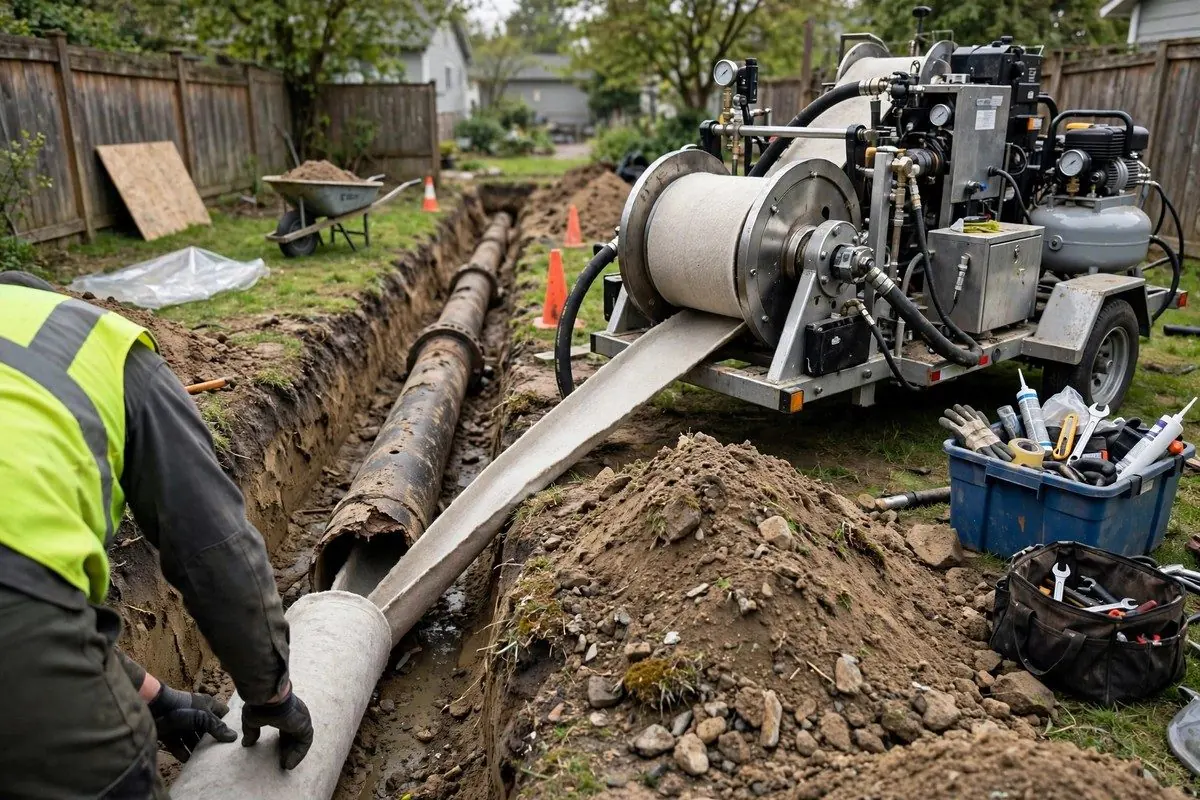
Pipe lining, also called trenchless repair, inserts a resin-saturated liner that hardens inside the old pipe and creates a new pipe within a pipe. It avoids a long trench and saves landscaping, but it needs a clean, round pipe, it narrows the bore slightly, and it cannot correct a belly or a collapse. Epoxy lining under a slab has similar limits. If the pipe under the slab is crushed or offset, lining will not fix it.
Full replacement removes the old run and installs new pipe, usually PVC, at the correct grade. It costs more up front and disturbs more of the yard, but it ends the uncertainty on a failing lateral. Some replacements can use pipe bursting, which pulls new pipe through the old path with less digging, if the old pipe is in line enough to allow it.
Cast iron sewer pipe: where it fails and what can be done.
Cast iron was common in homes built through the middle of the last century. It lasts a long time, but it rusts from the inside, building scale bumps that catch paper and shrink the bore. Eventually the wall can thin enough to leak or crack.
Repair options depend on the camera. A sound but rough pipe can be descaled and lined. A pipe with a cracked or rusted-through section may need that section cut out and replaced with PVC through a no-hub coupling. A fully corroded run is better replaced. Cast iron under a slab is an honest limit: repair there means breaking concrete, tunneling or lining, and the plumber should lay out each path with its risks before you decide.
Sewer Line Repair questions from Orem homeowners
Yes. Dispatch runs 24/7, and same-day appointments are offered when available. After-hours work is billed differently, and the plumber states that before work starts.
Repeated backups, a camera view of cracked or offset pipe, a sunken or soggy patch in the yard, and sewer odor outdoors all point at a break. A plain clog clears and stays clear. A broken pipe returns.
No. Lining suits a round, mostly intact pipe. It does not fix a belly or a collapsed section, and a pipe with severe offsets may need excavation. The camera findings decide, and the plumber should explain why.
The city's permit page calls for a permit when plumbing work is done, with some exceptions, and plumbing is governed by the 2021 International Plumbing Code with Utah amendments. Permit rules vary by job, so ask the Orem Building Safety Division about your repair.
Ask the City of Orem. The private lateral and the public main meet at a point that differs from property to property, and you should confirm it before any digging. Blue Stakes of Utah at 811 handles utility locates.
It can. Groundwater guidance from the state geological survey warns that buried utility lines can be damaged, and Orem lies in a low valley near the lake. A wet trench can add pumping or shoring to a repair.
Water and sewer lines are separate systems, and the water side is covered on the water line repair page. If both are in the same trench, the plumber can plan the work together. Dispatch also covers Provo, UT, where older clay and cast iron mains are more common.
Sources and references
- City of Orem Water Conservation Plan, October 2022, conservewater.utah.gov.
- Utah Geological Survey Public Information Series 105 (2023), geology.utah.gov.
- Orem adopted codes list and design criteria (frost line), orem.org.
- Blue Stakes of Utah excavators guide, bluestakes.org.
- U.S. Decennial Census counts as tabulated on Wikipedia.