Published by Orem 24/7 Plumbing, a dispatch service in Orem, UT. Page published October 23, 2026.
Sewage coming up in a tub, shower or floor drain is an urgent problem, and the Orem dispatch line runs 24/7. Until a plumber arrives, stop using every toilet, sink and the washing machine, do not flush, and keep children and pets out of any room with standing water.
Sewer line cleaning in Orem, UT is the clearing of the main drain that carries all household wastewater from the house to the city sewer main or a septic system. When this line clogs, every fixture in the house is affected, which is how it differs from a single clogged sink. The sections below explain how to recognize a main line stoppage, what the work involves and where the job ends.
How a main sewer line stoppage develops.
The main line is a 4 inch pipe, sometimes 6, that slopes downhill from the house toward the street. Everything flows into it: toilets, showers, sinks, the washer and any floor drains. Because the flow is shared, one blockage somewhere along the run backs up the lowest fixture first, which is usually a basement floor drain or a ground-level tub.
Blockages come from a few repeat causes. Tree roots enter at joints and grow into a net that catches paper. Grease from kitchens cools and lines the pipe. Wipes sold as flushable do not break down the way toilet paper does. Pipe belly, which is a low spot where the line has settled, holds water and solids and clogs again and again.
Early signs are mild. A toilet gurgles when the washer drains, water in the shower rises around your ankles, or a drain smells of sewer even though nothing is visibly backed up. When the main finally closes, it tends to happen at a bad hour, often when the laundry is running.
Sewer backup: what to do first.
Stop all water use in the house. That includes toilets, sinks, showers, the dishwasher and the washer. Every gallon you add will come out of the lowest drain.
Keep people and pets away from wet floors, and avoid skin contact with sewage. Wear boots and gloves if you must walk through it, and wash well afterward. If the water is near outlets or power strips, keep people away from them and shut power off at the panel only if the panel is dry and you can reach it safely.
Open a window if the smell is strong, and call. Backups that start overnight or over a weekend are answered by live dispatch, and same-day appointments are offered when available. Do not pour chemical drain cleaner into a sewer line, because it will not reach the blockage and it puts caustic liquid in the water the plumber has to handle.
How the line is cleared and how the plumber chooses the tool.
The plumber starts at the cleanout, a capped pipe in the yard, garage, basement or crawlspace that gives direct access to the main. Without a cleanout, access may come from pulling a toilet or from a roof vent. A cleanout makes the job simpler and cheaper, and installing one is often a good idea if the house has none.
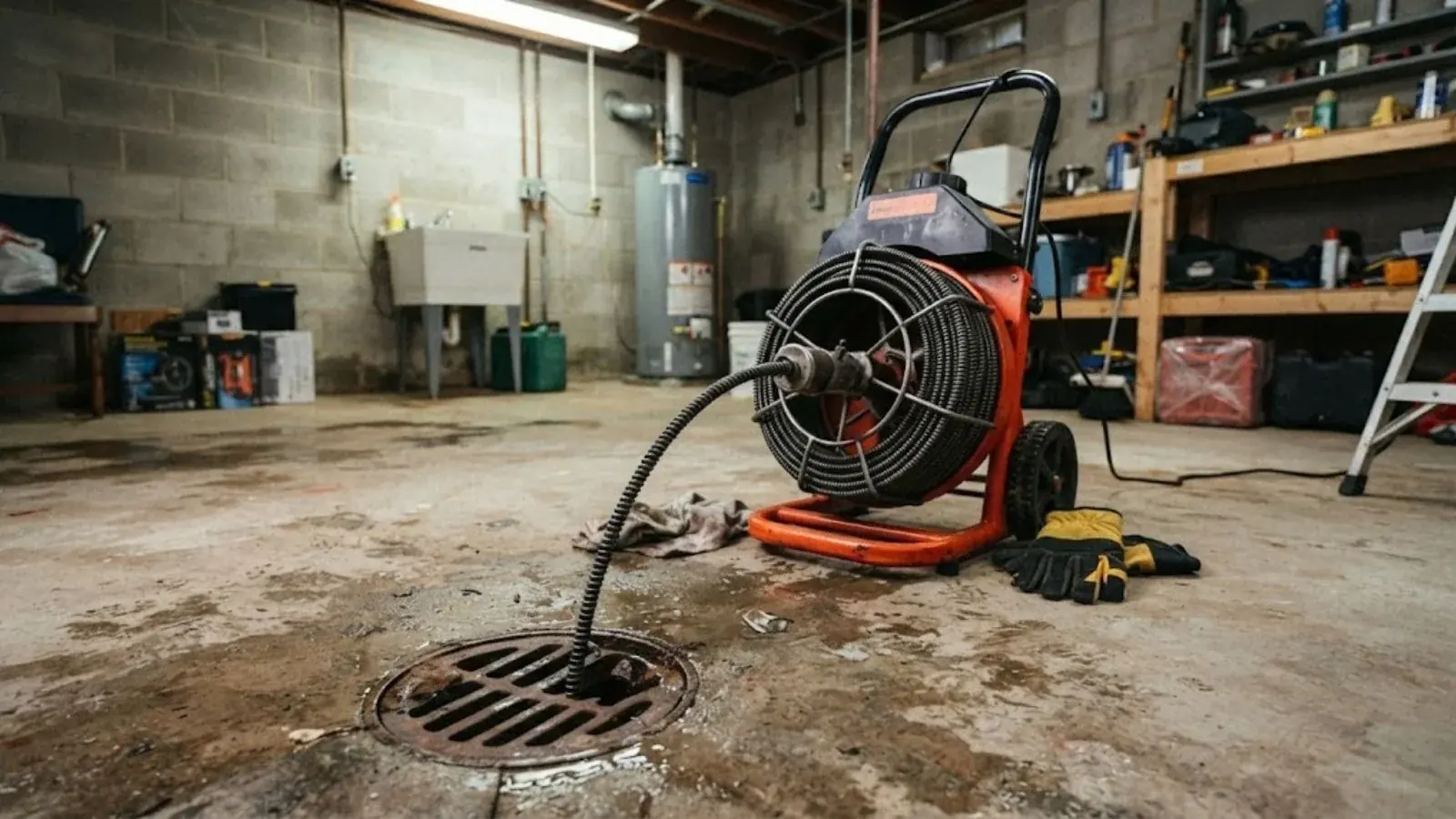
A large drum cable machine with a cutting head handles most main line stoppages, including roots. If the line is coated with grease or the stoppage returns, jetting the main line scours the wall and flushes the debris. A camera run afterward shows the pipe condition and whether a cleaning is a lasting fix.
When the same line backs up more than once in a year, a one-time cleaning is probably treating the symptom. That is the moment to ask for a sewer camera inspection and discuss whether the pipe needs repair.
Where cleaning turns into repair, the work falls under the plumbing code the city has adopted, the International Plumbing Code (IPC) with Utah amendments. Ask the Orem Building Safety Division whether a repair needs a permit.
A sewer backup does not wait for business hours, so call now and say which drains are affected.
Call (385) 488-1892Symptoms of a main line problem and what they usually mean.
These patterns help sort a main line stoppage from a fixture clog. A plumber confirms the cause on site.
| What you notice | Where it points | What gets checked. |
|---|---|---|
| Toilet gurgles when the washer drains | Partial main line restriction | Water flow at the cleanout, cable test. |
| Basement floor drain bubbles or fills | Full or near-full blockage downstream | Cleanout access, then cable or jet. |
| Slow drains in every bathroom | Shared line narrowed by roots or grease | Camera look to identify the cause. |
| Sewer odor with no visible backup | Dry trap, vent issue or small leak | Trap seal, vent, then the line. |
| Backup returns within weeks of cleaning | Belly, break or heavy root intrusion | Camera inspection and line locate. |
Water overflowing from a roof or yard drain belongs to the storm drain system, not the sewer main.
Local causes of main line trouble around Orem.
Orem's housing stock was built mostly between 1950 and 1980, after the city grew from about 8,000 to more than 52,000 residents. Laterals installed in that period are now decades old, so root-bound joints and settled sections are likelier here than in a new subdivision. If you have older trees near the sewer path, mention them when you call.
Orem sits in a low valley near Utah Lake, and Utah Geological Survey guidance puts shallow groundwater generally within 10 feet of the surface and notes it can harm buried utility lines. If a backup arrives with a wet basement and no heavy water use, a sump or groundwater problem may be involved alongside the sewer line.
The August 2024 storm dropped about an inch of rain in roughly 30 minutes and overwhelmed the city's storm drainage. Storm water is a separate system from sewage, but a flooded yard can hide a failing cleanout cap.
Septic tanks: a different job from cleaning the line.
Orem is largely on city sewer, but a property on septic needs a different job. This page covers cleaning the pipe that carries waste out of the house. It does not cover pumping a septic tank or servicing the drain field, which is a separate trade with its own licensing.
If you think your house is on septic, say so when you call. Ask the dispatcher whether the plumber will clear the line between the house and the tank, and who handles the tank itself. A backup into the house on a septic system may mean a full tank rather than a clog in the pipe.
What drives the cost of sewer line cleaning.
Prices vary because every main line differs. Five things shape the total.
Access to the cleanout
A working cleanout lets the plumber start at once. Pulling a toilet or cutting a new access adds labor.
How far the blockage is
A plug 20 feet out is a quick pass. One 80 feet out, past a bend, takes a bigger machine and more time.
Cause of the stoppage
Roots, grease and a collapsed pipe each need different tools, and the last one is a repair job, not a cleaning.
Jetting or camera add-ons
Cabling opens the line. Jetting cleans the wall. A camera shows what is left. Each adds time and equipment.
Time of the call
Night, weekend and holiday work is billed differently from daytime work, and you hear the number before work starts.
Coverage usually turns on whether the loss was sudden and accidental. Gradual leaks, root intrusion, wear and groundwater flooding are typically excluded. Some policies offer a separate sewer backup endorsement. Check your own policy before you assume anything.
A plumber can usually explain how the price will be built once the symptoms are described. Call (385) 488-1892 to talk it through.
Before the plumber arrives: protect the house and gather information.
These steps limit damage and speed up the visit.
- Turn off the washing machine and dishwasher so no more water enters the line.
- Move rugs, boxes and electronics away from any floor drain that has overflowed.
- Find the cleanout, if there is one, and clear the area around it so the plumber can reach it.
- Note which fixtures are affected and which still drain, with approximate times.
- Take photos of the water and any damage before cleanup, for an insurance claim.
- Tell the dispatcher about trees near the sewer path, previous backups and any past repair.
- Open gates and secure pets before the visit.
Sewer Line Cleaning questions from Orem homeowners
Yes. Dispatch is open 24/7, and same-day appointments are offered when available. Night and weekend work is billed differently from daytime work, and the plumber states the terms before starting.
If one sink is slow and the rest of the house drains normally, the clog is local. If a floor drain bubbles, a toilet gurgles when another fixture runs, or several drains slow at once, the shared main line is the likelier culprit.
Where the private lateral ends and the city main begins is not the same on every property. Confirm it with the City of Orem before digging, and call Blue Stakes of Utah at 811 before any excavation.
Cutting and jetting remove roots from the pipe, but if they entered at a joint, they will return. A lasting fix may be a spot repair or lining, which the sewer line repair page explains.
Policies typically cover sudden and accidental damage, but many exclude sewer backup unless an endorsement was added. They typically do not cover groundwater flooding. Read your own policy or ask your agent.
A dry trap in a rarely used drain is the usual cause, and running water for a minute can restore the seal. If the smell is strong, persistent, or you smell natural gas, leave the building and call the gas utility or 911 first, then call for a plumber. Dispatch also covers Pleasant Grove, UT, where a backed-up main line gets the same first steps.
Sources and references
- City of Orem Water Conservation Plan, October 2022, conservewater.utah.gov.
- Utah Geological Survey Public Information Series 105 (2023), geology.utah.gov.
- Fox 13 Salt Lake City, August 14, 2024, storm coverage.
- Blue Stakes of Utah excavators guide, bluestakes.org.
- U.S. Decennial Census counts as tabulated on Wikipedia.