
Published by Orem 24/7 Plumbing, a dispatch service in Orem, UT. Page published October 23, 2026.
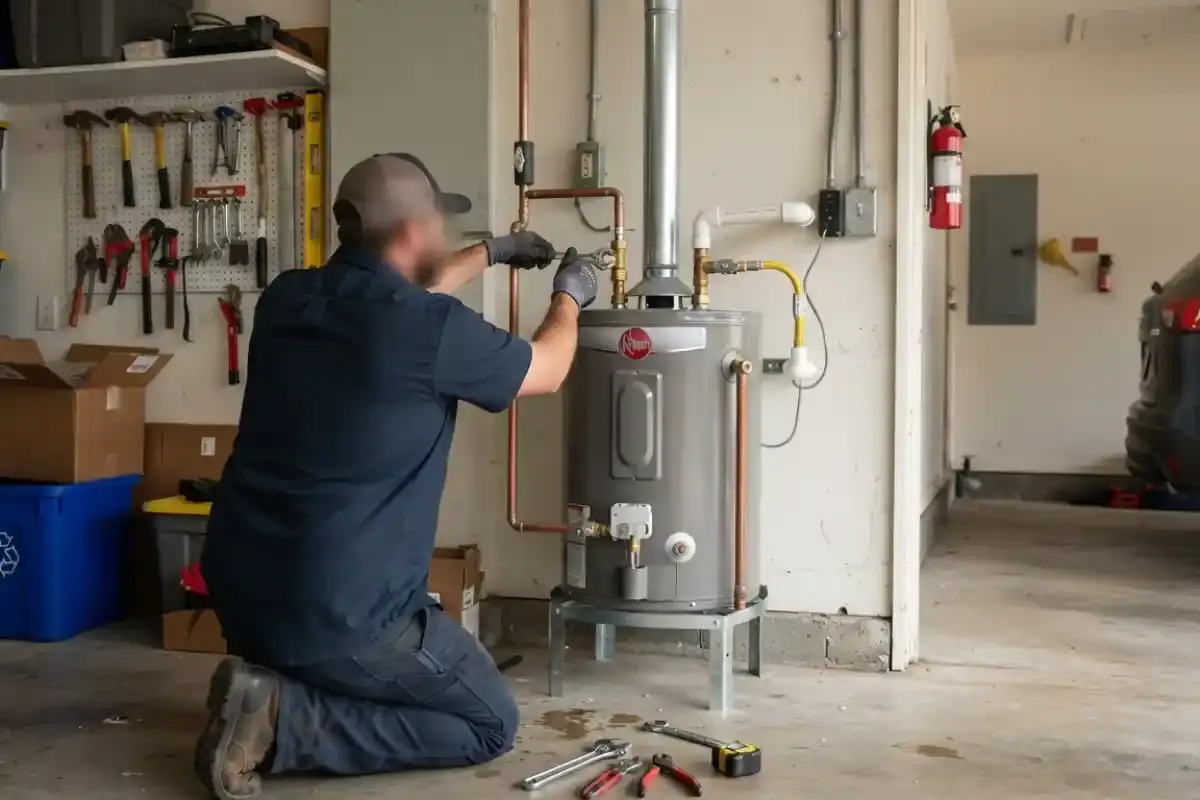
Water heater installation in Orem, UT is the planned work of putting a new tank, heat pump unit or tankless heater into a home, either as a first install, a relocation or a deliberate upgrade. Licensed and insured plumbers handle the water connections, gas or electric hookup, venting and discharge piping. Because you are choosing rather than reacting, the decisions that matter most are size, location and fuel.
If your current tank is already leaking, that is an urgent job and belongs under emergency replacement. This page is for the calm version, where you have time to compare options and ask questions.
How a planned water heater install runs.
Scheduled installs follow a predictable order, and knowing it helps you prepare.
Walk the site
The plumber looks at the location, the venting path, the gas line or circuit, and the route the new unit will take into the house.
Choose the unit
Capacity, fuel and efficiency are matched to your household, and you agree on what is included before any work starts.
Set up the rough work
Supply lines, a shutoff valve, a relief valve with a discharge pipe and any vent changes are done before the tank is set.
Connect and test
Joints are checked for leaks, gas connections are tested, and the unit is brought up to temperature.
Review and paperwork
You get a walkthrough of the shutoff valve, the thermostat and the maintenance schedule, and the permit steps are explained.
Sizing a tank, and why 40 gallons is only a starting point.
Forty gallons is the number most homeowners ask about, and it does suit many two to three person households. It falls short when a large soaking tub, a dishwasher and a laundry load overlap. The better figure is the first-hour rating on the label, which tells you how much hot water the unit can deliver when the tank is full and the burner or elements are working.
Location is the second sizing question. A tank in a closet needs a certain amount of clearance for service, combustion air for gas units, and a path to a floor drain or an outside wall for the discharge pipe. Moving a heater across the house is possible but adds pipe, venting and sometimes carpentry, so it is quoted as separate work.
Expansion tanks come up when the house has a closed water system, such as a check valve or pressure reducing valve at the meter. As water heats, it expands, and with nowhere to go the pressure spikes. A small expansion tank on the cold line absorbs that growth. Ask the plumber whether your system needs one and what the pressure reads at the tap.
What shapes the price of an installation.
Install totals vary because the starting point of each house is different. Here is what moves the number.
Type of heater
A standard tank, a hybrid heat pump unit and a tankless model each come with their own parts, labor and hookup.
Venting changes
A direct vent, a power vent or a rerouted flue costs more than reusing an existing, sound vent.
Gas and electrical upgrades
A larger gas line, a new circuit or a panel check for heat pump and electric units adds scope.
Code items and permits
Expansion tanks, support, discharge piping and permit fees are part of the real total.
Location and access
A basement with a straight staircase is faster than an attic or a tight crawl space.
A planned upgrade is not an insurance matter. Homeowners policies typically cover sudden and accidental damage and typically exclude wear and gradual leaks, so a new installation you choose yourself is generally your own cost. Check your policy for specifics.
A fair quote lists the unit, the labor, the venting and the code items separately. For a number that fits your house, call (385) 488-1892 and describe the current heater and where it sits.
Ready to size and schedule a new heater? Call (385) 488-1892 and ask what slots are open.
Call (385) 488-1892What to do before the installer arrives for a water heater.
These steps keep the install safe and keep it from running long.
- If you smell gas, leave the building and call the gas utility or 911 first.
- Shut off the cold water supply to the old heater, and shut off the gas valve or the breaker only if you can reach them safely.
- Clear at least a few feet of working room around the heater, and move stored items out of the area.
- Look for water on the floor around the tank and note it, since a slow leak may mean the old tank has failed.
- Note the fuel type and the tank size on the label so the installer can bring the right parts.
- Ask the installer whether a permit applies, because rules vary by job and the Orem Building Safety Division can answer.
Choosing a type: tank, heat pump or tankless.
The right heater depends on space, fuel and how your household uses hot water.
| Type | Where it fits | Watch for. |
|---|---|---|
| Standard gas tank | Homes with existing gas and a vent path | Venting, combustion air, gas safety checks. |
| Standard electric tank | Homes without gas, or utility closets | Circuit capacity and element life. |
| Hybrid heat pump tank | Rooms with open air and a drain nearby | Clearance, a condensate drain, room temperature. |
| Tankless gas | Households wanting continuous hot water | Larger gas line and new venting, scale management. |
| Tankless electric | Small loads or point-of-use needs | Very high electrical load, panel capacity. |
Tankless units are covered in more depth on the tankless water heater page, including descaling and service.
Orem permits, codes and where the unit goes.
Plumbing work in Orem is governed by the 2021 International Plumbing Code (IPC) as adopted by the city with Utah amendments. The City of Orem Building Safety Division handles permits, and the city says a permit is needed when someone has plumbing or heating work done, with some exceptions on a separate page. Permit rules vary by job, so ask the Orem Building Safety Division before the work begins.
For comparison, the Provo Building Division states that replacing water heaters requires a building permit and an inspection once the work is complete. A heater in an unheated garage or against an exterior wall needs insulated supply lines and a protected discharge pipe, so ask how the plumber plans to handle that. Gas and oil-fired units also call for a carbon monoxide alarm near the sleeping area.
Questions to settle before the install day.
- What is the first-hour rating of the unit being proposed, and does it match your busiest morning?
- Will the existing vent be reused, rerouted or replaced?
- Does the plan include an expansion tank, a new shutoff valve and a proper discharge pipe?
- Who pulls the permit, and what inspection comes after?
- What will be hauled away, and what is left for you to handle?
- If you smell gas at any point, leave the building and call the gas utility or 911 first.
What this page does not cover.
This page covers the water heater and its direct connections. Moving walls, building a new closet, upgrading a main electrical panel and rewiring are separate trades, and a plumber will coordinate with a licensed electrician or contractor when those are needed. For fixtures and other planned work beyond the heater, see general plumbing installation on a separate page.
We also do not give electrical advice here. If a heat pump or tankless electric unit needs a new circuit, a licensed electrician should review the panel and the load. Gas safety is the same: if you ever smell gas near a heater, leave the building and call the gas utility or 911. For a nearby town question, the Pleasant Grove service page covers how dispatch works there.
Water Heater Installation questions from Orem homeowners
For many two to three person households, yes. Larger families or homes with big tubs often do better with 50 gallons or a different type. Use the first-hour rating on the label as your guide, and tell the plumber when your hot water demand peaks.
Permit rules vary by job, so ask the Orem Building Safety Division. Provo's Building Division states plainly that water heater replacement needs a permit. A licensed plumber can describe how permits and inspections normally work.
If your home has a closed system, such as a pressure reducing valve or check valve on the incoming line, probably yes. A pressure reading at an outdoor spigot or the heater helps the plumber decide.
Often, but it adds pipe, venting and sometimes gas or electric work. Gas units need combustion air and a clear vent path, and heat pump units need open air and a drain.
It matters mostly for buried lines and for heaters in unheated garages or against outside walls. A heater in a cold space needs its supply and discharge lines protected, so mention the location when you call.
Leave the building immediately and call the gas utility or 911 from outside. Do not turn lights on or off, use a phone inside, or try to relight anything. A plumber can inspect the line after it has been declared safe.
Same-day appointments are offered when available, and planned installs can be booked by calling (385) 488-1892. There is no online scheduling. Everything runs through a phone call.
Sources and references
- City of Orem adopted codes list and Building Safety Division permit page, orem.org.
- Provo City Building Division, provo.org (water heater replacement requires a building permit).