
Published by Orem 24/7 Plumbing, a dispatch service in Orem, UT. Page published October 23, 2026.
Basement waterproofing in Orem, UT is the work of keeping groundwater and surface water out of a below-grade space, and the first job is deciding where the water actually comes from. A cracked supply line, a failed sump pump, a blocked floor drain, a window well that floods and a high water table all look alike on a wet floor.
This page is for planned work. It explains how a plumber separates plumbing sources from foundation and grading sources, which fixes sit in a plumber's scope and where you need a different contractor. Active flooding with a failing pump belongs on the sump pump page.
Why is my basement wet? Sorting water sources before waterproofing.
Waterproofing is the name for the fix, but the cause determines the fix. This table sorts what you see into the likely source and who handles it.
| What you notice | Likely source | Who handles it. |
|---|---|---|
| Wet floor only after heavy rain | Surface water, window wells, grading | Grading or drainage contractor, plumber for sump discharge. |
| Water at the wall-floor joint | Groundwater pressure through the cove joint | Interior drain and sump, plumber or waterproofing contractor. |
| Damp spot that never dries | Leaking supply, drain or water heater | Plumber, with leak tracing. |
| Floor drain bubbles or overflows | Blocked main or branch drain | Plumber, cleaning the line. |
| Musty smell and white powder on walls | Seepage with efflorescence | Waterproofing or foundation contractor. |
| Water rising from the sump pit | Pump failure or high groundwater | Plumber, sump pump repair. |
A cracked foundation wall, bowing block or settlement is structural. A plumber does not repair those, but a damp spot that never dries is worth tracing with leak detection before anyone digs.
Interior drains, exterior work and sump systems compared.
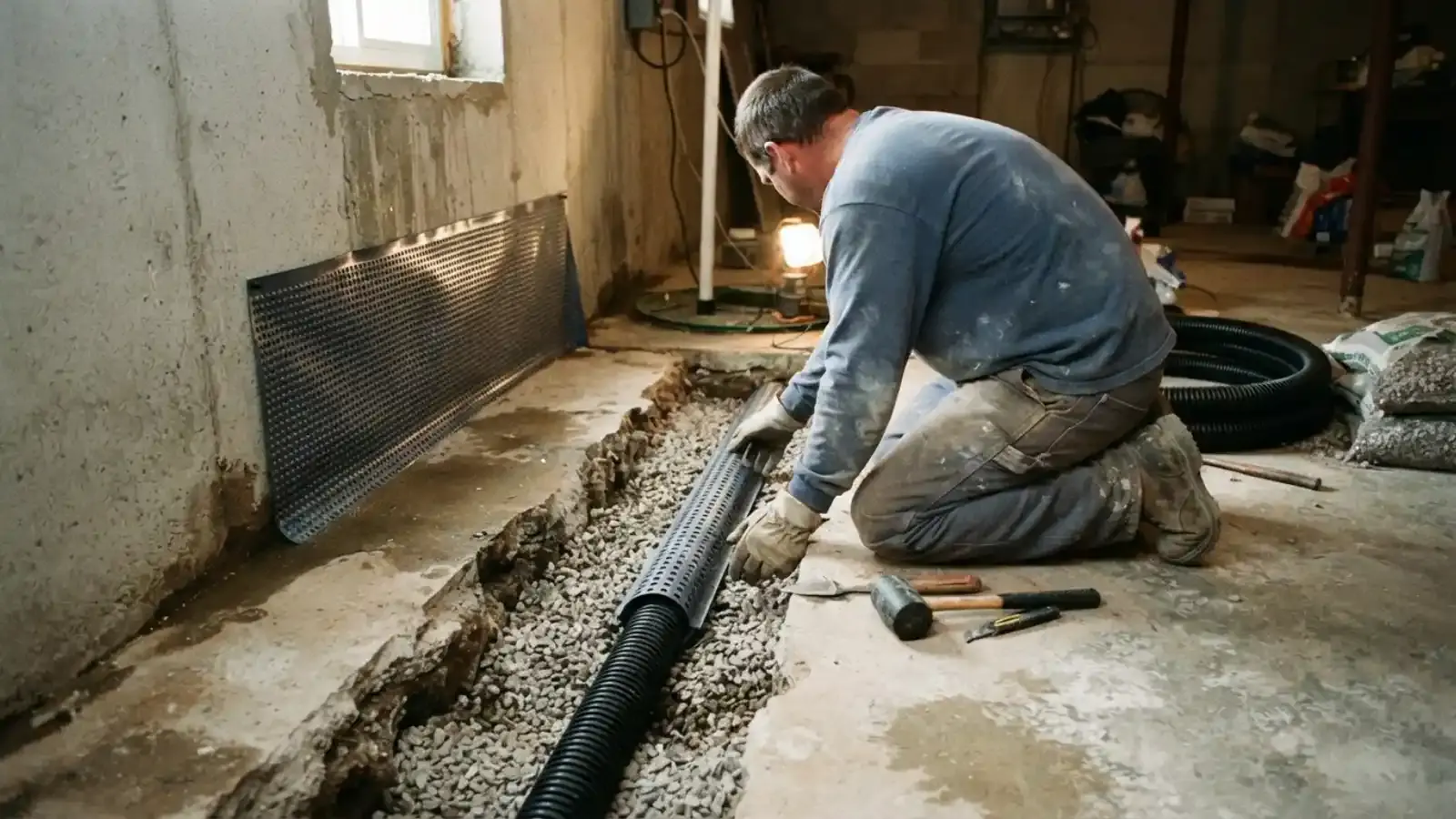
An interior drain system is a perimeter channel cut into the slab edge, with perforated pipe in gravel that carries water to a sump pit. It manages water that reaches the footing and does not stop it from reaching the wall. It is the usual plumbing-side option because it needs no digging around the house.
Exterior waterproofing means excavating down the outside wall, cleaning it and applying a membrane with drainage board and a footing drain. It stops water at the wall but costs more, disturbs landscaping and belongs to an excavation or foundation contractor, not a plumber.
A sump pump is the exit, not the barrier. It lifts collected water out through a discharge line to a safe spot. The pump, check valve, discharge pipe and battery backup are plumbing parts, which is why sump pump repair and installation is the plumber's side of the job.
What a plumber can and cannot do about a wet basement.
A plumber can find leaking supply and drain lines, clear a blocked floor drain, repair or replace a sump pump and discharge and tie an interior drain into a pit. A plumber does not repair structural cracks, regrade a yard, install exterior membranes or guarantee a dry basement.
A camera can follow a drain line but cannot see through soil to tell whether groundwater is entering a wall. If water is rising now, treat it as an active failure and use the sump page, because waterproofing is a project and not a rescue.
Not sure whether a wet basement is a plumbing problem? Call (385) 488-1892 and describe where the water shows up.
Call (385) 488-1892Utah Valley groundwater and the August 2024 storm.
Utah Geological Survey guidance says shallow groundwater is generally within 10 feet of the surface, is more likely in low-lying valley areas and near rivers, streams and lakes, and can flood basements. Orem sits in a low valley near Utah Lake, so a basement here can see groundwater pressure in spring and wet years. Ask the plumber how deep the slab sits and whether an interior drain would reach the footing.
In August 2024, Orem's public works director described a rainstorm of about 1 inch in roughly 30 minutes as greater than a 100 year storm event, and the storm drainage system was overwhelmed. A flood from surface water is a grading and drainage problem, not a plumbing fault. A floor drain that backs up during that storm is different: it points to a blocked or overloaded line, which sewer line cleaning addresses.
The same guidance says sump pumps should be inspected and maintained annually, in winter, before groundwater typically becomes a problem. Standard homeowners insurance does not cover groundwater flooding, so check your own policy and decide on any extra coverage before a wet season, not after.
What to do before the plumber arrives when water is entering the basement.
Water in a basement mixes with electricity and household chemicals, so safety comes before cleanup.
- Stay out of standing water if any outlet, extension cord, freezer or appliance sits in it, and keep children and pets away.
- Turn off power at the panel only if the panel is dry and you can reach it without stepping through water.
- Move valuables, boxes and paper goods to a dry level, and lift furniture legs onto blocks.
- Photograph the water line on the walls and the damaged items before you move anything, for an insurance claim.
- Check that the sump pump is running and that the discharge pipe outside is not frozen or blocked.
- Do not run a wet vacuum on a wet floor from an ungrounded outlet.
How a waterproofing assessment is done.
Walk the space
The plumber maps where water shows, checks window wells, downspouts and floor drains, and notes the age and condition of the foundation.
Rule out plumbing sources
Supply lines, the water heater and drain stacks are checked, and a meter test shows whether water is leaking inside the house.
Check the sump and drains
The pit, pump, float and discharge are tested, and drains are cleared or scoped if a blockage is suspected.
Recommend a path
You hear which parts belong to plumbing and which need a foundation or grading contractor, so you can compare quotes.
Document the problem before calling.
- Note when water appears: during rain, in spring melt, or all year.
- Check that downspouts discharge several feet from the foundation and window wells are clear.
- Photograph wet areas, stains and white mineral deposits with a measuring tape for scale.
- Test the floor drain with a bucket of water and watch how fast it clears.
- Move stored items off the floor and keep electronics off wet carpet.
- Read your insurance policy for groundwater and sewer backup exclusions.
What shapes the cost of waterproofing work.
Costs depend on the source and the method, so a price only makes sense after the cause is known. You get a clear price before work starts.
Interior versus exterior
Interior drains and a sump involve concrete cutting and a pit. Exterior work means excavation and is usually priced by a different contractor.
Length of wall affected
A single wall costs less than a full perimeter, and extent drives pipe, gravel and labor.
Sump equipment
Primary and backup pumps, battery systems, check valves and discharge routing each change the scope.
Slab and soil conditions
Reinforced slabs, finished floors and tight access add time.
Permits and discharge rules
Where the sump discharges and what permits apply can vary, so ask the Orem Building Safety Division.
Standard homeowners insurance does not cover groundwater flooding, and gradual seepage is typically excluded. Sudden pipe bursts may be covered, so check your own policy.
A fair number needs the cause first. Call (385) 488-1892 to describe what you see, and the plumber will say whether it is a plumbing job or one for another contractor.
Basement Waterproofing questions from Orem homeowners
Rain can overload window wells, downspouts and the storm system, and groundwater can rise in a valley near Utah Lake. The first step is to separate surface water from a plumbing source.
Partly. Sump pumps, interior drains tied to a pit, floor drains and leak tracing are plumbing. Foundation repair, regrading and exterior membranes are done by other contractors.
Standard homeowners insurance does not cover groundwater flooding, and gradual leaks are typically excluded. Sudden and accidental damage may be covered, so read your own policy.
Utah Geological Survey guidance recommends inspecting and maintaining sump pumps annually, in winter, before shallow groundwater typically becomes a problem.
Small hairline cracks may be sealed, but a plumber does not repair structural cracks or bowing walls. A foundation contractor handles those.
Dispatch covers Orem and nearby towns. Foundations and drain layouts differ from one home to the next, which the plumber considers on the call. Dispatch also covers Vineyard, UT, where newer homes sit on the same shallow-groundwater valley floor.
Sources and references
- Utah Geological Survey Public Information Series 105 (2023), Shallow Groundwater Hazard in Utah.
- Fox 13 Salt Lake City, August 14, 2024 (storm drainage overwhelmed).
- Orem Building Safety Division, orem.org.