
Published by Orem 24/7 Plumbing, a dispatch service in Orem, UT. Page published October 23, 2026.
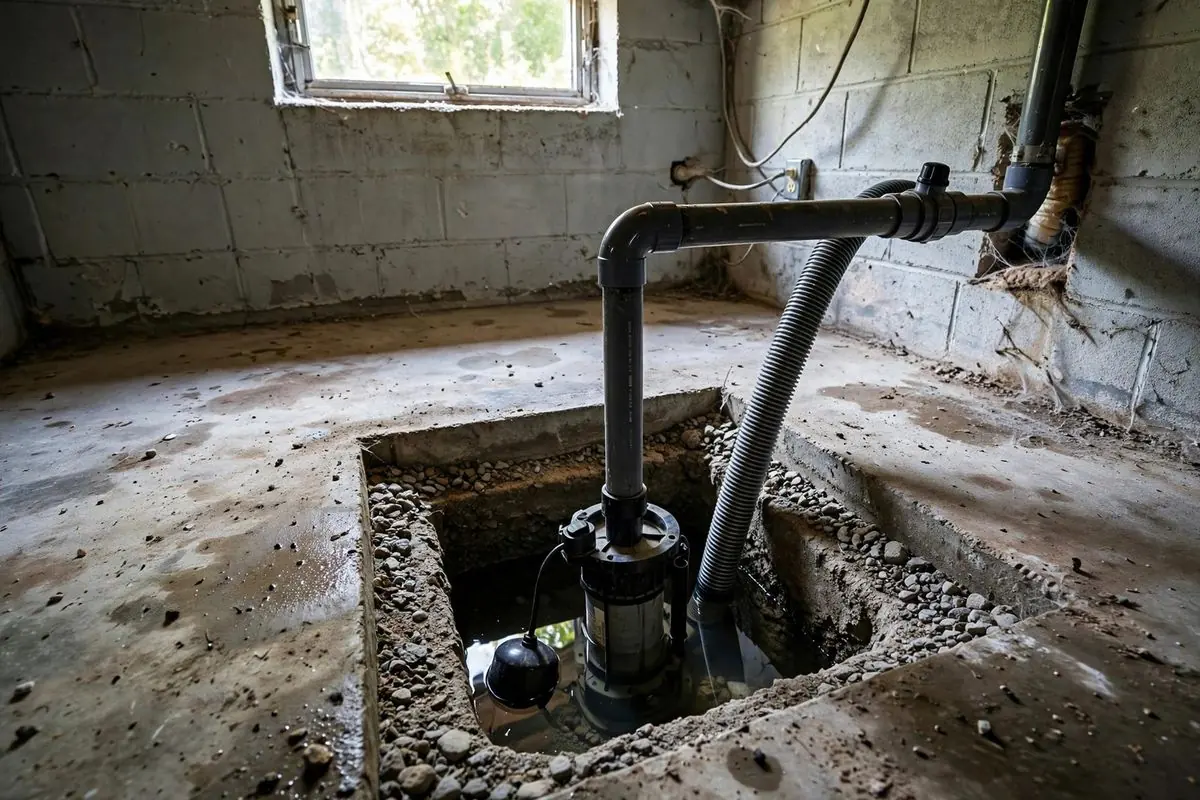
Water rising in a basement is an emergency that does not respect the clock, and sump pump dispatch runs 24/7. Stay out of standing water if anything electrical is nearby, move valuables up off the floor, and call (385) 488-1892. Sump pump repair in Orem, UT covers diagnosing a pump that will not start, will not stop or cannot keep up, then repairing or replacing the pump, float, check valve or discharge line.
A sump pump sits in a pit and moves water out of the house before it reaches the floor. Utah Geological Survey guidance calls for an annual winter check of every sump pump, timed ahead of the groundwater season. This page covers what to do right now, why pumps fail, what a visit involves, and how repair compares with replacement.
Water coming up in the basement right now: what to do first.
First, check the electrical situation. Do not step into standing water if the pump, power strips or the panel are in it. Switch power off at the breaker panel only when the floor around it is dry and you can get there without wading. Otherwise stay out and call.
If the pit is full and the pump is silent, look at the plug and the breaker. A tripped circuit or a loose plug is the most common reason a pump stops, and it takes seconds to check from a dry spot. Do not pull a plug while standing in water.
Lift boxes, rugs and electronics off the floor, and run a bucket brigade only if the water is shallow and clear of electrical hazards. Describe what you see when you call: pit full or empty, pump humming or silent. Dispatch covers nights and weekends, and same-day appointments are offered when available.
Why sump pumps fail.
Most pumps fail in one of a few ways. The float switch snags on the pit wall or wedges in debris, so the pump never starts or never shuts off. A pump that runs constantly may be burning out its motor. A seized impeller hums but moves no water.
A failed check valve lets water fall back into the pit after each cycle, so the pump short-cycles and wears out. A frozen or clogged discharge line has nowhere to push water, and the pit fills even though the pump runs. Power loss during a storm is the other classic: the pump is fine, but nothing powers it.
Primary pumps take the load most of the time, and a backup pump or a battery-powered unit takes over when the primary fails or the power drops. Homes with no backup have no margin for a bad night. Ejector pumps are a related device that lifts sewage and wastewater from a basement bathroom up to the sewer line. They are built for solids and are not interchangeable with a sump pump.
Not every wet basement is a pump problem. Seepage along the joint where the floor meets the wall may be groundwater pressure, which is a basement waterproofing question, and a floor drain that gurgles up is usually a drain clog. A damp spot that appears in dry weather with a quiet pit can also be a supply line, and leak detection finds that.
What happens during a sump pump visit.
The goal is to decide fast whether the pump needs a repair or a replacement.
Check power and the pit
The technician checks the outlet, the breaker and the pit for debris, then pours water into the pit to see whether the float lifts and the pump starts.
Test the pump and valve
The pump runs through a full cycle. The check valve is inspected for backflow, and the discharge line is traced to find kinks, ice or blockage.
Decide repair or replace
A stuck float or a clogged intake is a small repair. A burned motor or a cracked housing usually means a new pump.
Add protection if needed
A battery backup, a second pump or a high-water alarm can be added so a power failure does not leave the pit unprotected.
Run a final test
The pit is filled again to confirm the pump starts, empties it and shuts off without short-cycling.
Pit full and the pump silent? Call (385) 488-1892 now and say what you see, so dispatch can bring the right parts.
Call (385) 488-1892Repair or replace: how the options compare.
Pump choices depend on how old the unit is, how it failed and how much water the pit handles.
| Option | Fits when | Trade-off. |
|---|---|---|
| Replace the float switch | The pump motor is healthy but the switch is stuck or worn | Inexpensive and quick, but only helps if the motor is sound. |
| Replace the check valve | Water backs into the pit after each cycle | Small part, but it needs the discharge line opened and drained. |
| Replace the pump | The motor is burned, the impeller is seized or the housing is cracked | Reliable fix, but size the new pump to the pit and the head height. |
| Add a battery backup | Storms or outages have left the pit without power | Protects against outages, but batteries need periodic testing. |
| Install a second pump | A single pump cannot keep up in heavy water or a failure would cost a lot | More protection and more equipment to maintain. |
| Clear or reroute the discharge | The line is clogged, frozen or discharges too close to the foundation | Fixes the real cause, but a poorly placed line can return water to the pit. |
A pump that is more than a decade old and has begun to cycle strangely is usually a replacement, not a repair. A plumber can tell you from the model and the symptoms.
Why Orem's valley location and August 2024 matter for sump pumps.
Orem sits in a low valley near the eastern shore of Utah Lake. Per Utah Geological Survey guidance, groundwater within about 10 feet of the surface tends to collect in low valley floors and beside lakes and streams. Where it rises, basements can take on water. The same guidance asks owners to inspect and maintain their pumps once a year during winter.
Heavy rain is a separate stress. In August 2024, Orem's public works director described about 1 inch of rain in roughly 30 minutes as greater than a 100 year storm, and the storm drainage system was overwhelmed. That kind of surface flooding fills a pit fast and also strains the discharge, so a sump that works in a slow spring melt can still fall short in a flash storm.
The survey also notes that groundwater flooding is excluded from standard homeowners coverage. If a pump fails during a storm, the damage may fall under different rules than a sudden pipe burst. Check your own policy.
Before you call about a sump pump.
A few answers shorten the diagnosis.
- Say whether the pit is full, half full or empty and whether the water level is rising.
- Note whether the pump is silent, humming, running nonstop or cycling on and off.
- Check that the pump is plugged in and that the circuit breaker and any GFCI outlet have not tripped, only from a dry spot.
- Look at the discharge pipe outside and note ice, a crushed section or an outlet that drains near the foundation.
- Write down the pump brand and any label details so the technician can match a part.
- Tell the dispatcher if you have a battery backup or a second pump and whether the alarm sounded.
- Photograph any wet areas and the damage for insurance before you move belongings.
What affects sump pump repair and replacement cost.
A stuck float and a full pump replacement with a backup system are different jobs, and the quote follows what the technician finds.
Failed component
A float or check valve is a small part. A motor failure usually means a new pump.
Pump size and type
Horsepower, flow rate and head height must match the pit and the discharge route, and ejector pumps differ from sump pumps.
Backup systems
Battery backups, second pumps and alarms add equipment and installation work.
Discharge line condition
Clearing, replacing or rerouting the line changes the scope.
Timing and conditions
Active flooding after hours calls for faster scheduling than a planned winter inspection.
Sudden and accidental damage is what homeowners policies typically cover, but standard policies leave out groundwater flooding, and some insurers offer a separate water backup endorsement for pump failure. Read your own policy and ask your agent before the claim.
A clear price is given before work starts. Call (385) 488-1892 to describe the pit and the pump and get a real number.
Sump Pump Installation & Repair questions from Orem homeowners
Yes. Dispatch runs 24/7, so a pump that fails in a midnight storm gets a call answered. Same-day appointments are offered when available. Stay out of standing water near electrical equipment and call (385) 488-1892.
A running pump that cannot clear the pit usually has a clogged intake, a failed check valve, a frozen or crushed discharge line, or a pump that is too small for the inflow. A plumber checks each in order. Do not keep running a pump dry or against a blocked line.
Once a year, during winter, according to Utah Geological Survey guidance. Pour water into the pit and watch the float lift and the pump cycle. Orem's valley location makes that annual check worth doing.
Groundwater flooding is excluded from standard homeowners coverage, according to Utah Geological Survey guidance. Some policies offer a water backup endorsement for pump failure. Read your own policy or ask your agent.
A battery backup protects a basement when the power goes out in a storm, which is often when a pump is most needed. It is optional, and it depends on how much water the pit handles and how much is at risk below. A plumber can size one for your pit.
A sump pump removes groundwater and rain from a pit. An ejector pump lifts sewage and wastewater from a basement bathroom or laundry up to the sewer line. Ejector pumps are built to pass solids and are not a substitute for a sump.
It was mostly a surface drainage event. The city's public works director said the storm drainage system was overwhelmed by about 1 inch of rain in roughly 30 minutes. A pump can only move what reaches the pit, so a pump in good condition with a clear discharge line is the best preparation. Dispatch also covers Vineyard, UT, where low ground makes a working pump matter.
Sources and references
- Utah Geological Survey Public Information Series 105 (2023), Shallow Groundwater Hazard in Utah, geology.utah.gov.
- Fox 13 Salt Lake City, published August 14, 2024, Orem storm coverage.