
Published by Orem 24/7 Plumbing, a dispatch service in Orem, UT. Page published October 23, 2026.
Whole-house repiping in Orem, UT means replacing the water supply lines inside a home, from the main shutoff to every faucet, shower and appliance. It is a planned project, not a rescue. Homes reach it after years of rusty water, thin pressure or leaks that keep coming back in new places.
This page helps you decide whether the pipes are the real problem, whether a section will do or the whole house needs it, and what the job involves. Sudden failures belong on the burst pipe repair page, and repiping covers supply lines only, not drains or sewer lines.
Brown water, weak pressure and pinhole leaks: when the pipes are the problem.
Old supply pipe tells on itself. Rusty or brown water from the tap after it sits overnight, pressure that has faded across the whole house, pipe that sweats or shows green crust at the joints, and pinhole leaks that appear in a new spot every year. All of these point toward pipe that is wearing out. Plumbers call the fix whole-house repiping, and it replaces the lines instead of patching them one at a time.
Orem's housing stock makes the question worth asking. The city grew from about 8,000 people in 1950 to more than 52,000 by 1980, so most homes were built in a window of roughly 30 years. Many may still have original supply lines that are now decades old. That is a prompt to inspect your own pipes, not proof that yours are failing.
Orem's 2022 water conservation plan lists a replacement program for water mains and galvanized service lines, which concerns the utility's side. Inside the house, galvanized supply pipe is common in older homes, so check what material your own lines are. A magnet and a flashlight at the entry point often answer the first question.
Pipe material, warning signs and what replacement looks like.
The material in your walls decides most of the plan. A plumber confirms it by looking at exposed sections, so treat this table as a starting point, not a verdict.
| Pipe type | Signs of trouble | How it is identified | Replacement note. |
|---|---|---|---|
| Galvanized steel | Rust-brown water, falling pressure, crusty joints | Dull gray, a magnet sticks, threaded fittings | Usually replaced fully, since scale builds inside. |
| Copper | Green crust, pinholes, pitting near joints | Orange-brown metal, soldered fittings | Often repaired in sections, repiped when pinholes spread. |
| CPVC | Brittle cracks at elbows and fittings | Cream or light-yellow plastic, rigid | Replace cracked runs, or repipe if failures repeat. |
| PEX | Rare pipe failures, usually at fittings | Flexible red, blue or white tubing | Modern replacement material, easy to route. |
| Unknown gray plastic | Leaks at fittings, uncertain age | Ask the technician to identify and note it | Plan replacement once the type is confirmed. |
One failure does not condemn a house. A pattern of failures across several rooms does.
How to inspect your own pipes before you call.
A short walk through the house gives a plumber a head start and keeps you from replacing pipes that are fine.
- Look at the pipe where it enters the house and near the water heater, and note the color and fittings.
- Run the cold tap at the farthest fixture for a minute after the house has been quiet overnight and check for brown or orange water.
- Compare pressure at the kitchen, a bathroom and an outside hose bib to see whether it fades at every tap.
- Check under sinks and in the basement or crawlspace for green crust, white mineral buildup or pinhole drips.
- List every leak you have had repaired, with the year and location, so a pattern becomes visible.
- Note how old the house is and whether any repiping has been done before.
- Have the answers ready when you call (385) 488-1892 and ask the dispatcher what else to photograph.
Rust in the water or leaks that keep coming back? Call (385) 488-1892 to talk through what your pipes need.
Call (385) 488-1892How a whole-house repipe is done.
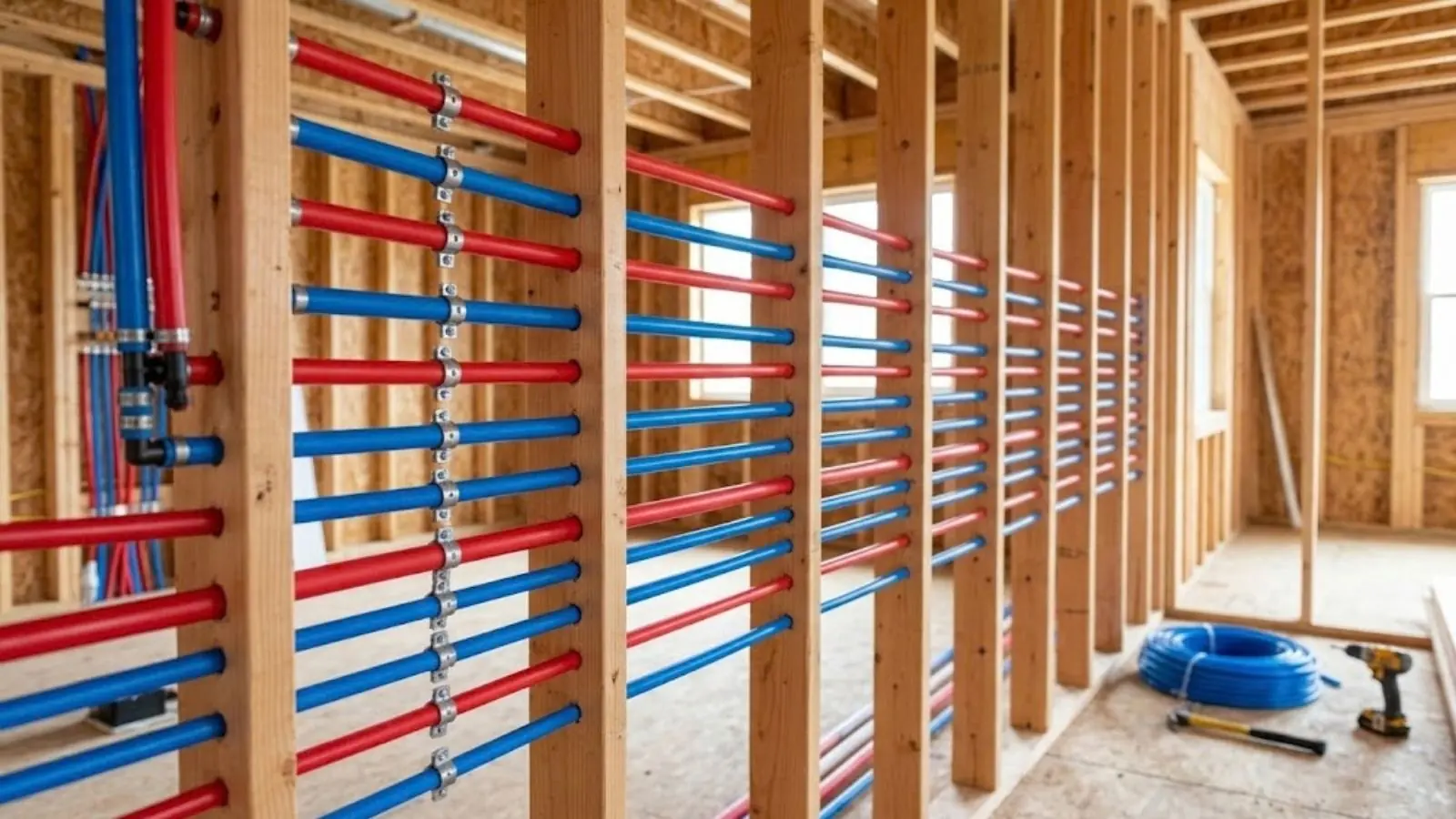
The job starts with a walkthrough that counts fixtures, traces the old runs and picks a route for new ones. New pipe is usually PEX or copper, chosen for the house and the budget. Water is shut off at the main for working periods and restored between stages, and a plumber can explain how the schedule affects your household when you call.
Access is the major variable. Crews work through attics, crawlspaces, basements and a small number of drywall openings, and new lines often follow different paths than the old ones. Each connection is made, the lines are pressure tested, and the old pipe is capped or removed before openings are closed.
The city has adopted the 2021 International Plumbing Code (IPC), with Utah amendments, for plumbing work in Orem. A repipe is a large job, and the permit question is best put to the Orem Building Safety Division before the schedule is set. Drywall repair and paint after a repipe are other trades, and the scope you agree on should say who handles them.
What repiping does not fix, and when it is the wrong answer.
Repiping replaces supply lines. It does not touch the drains, the sewer line, the water heater, or the buried service line between the meter and the house. If your pressure problem starts outside, the fix may be water service line repair instead.
It also will not solve a single leak. One pinhole in an otherwise healthy line should be repaired and watched. Finding where a hidden leak is coming from is a leak detection question before it is a replacement question.
Discolored water can come from the city system, a water heater tank or a stirred-up main, not only from your pipes. A plumber can tell the difference by checking cold and hot taps separately. This page does not cover water treatment, which is a different trade.
What makes one repipe cost more than another.
Repiping is one of the larger plumbing jobs, so the way it is priced matters as much as the number.
Size of the house
More bathrooms, kitchens and fixtures mean more pipe and more connections.
Number of stories and layout
A two-story house with finished walls takes more routing work than a single-story with a crawlspace.
Pipe material chosen
PEX and copper differ in material cost, labor and how they behave in your walls.
Access and openings
Open attics and crawlspaces reduce drywall cuts, while closed walls increase them.
Permit and finish work
Permit steps, inspections and drywall patching either sit inside the quote or outside it, so ask which.
Homeowners policies typically cover sudden and accidental damage and typically do not cover wear, corrosion or gradual leaks, so a repipe for an aging system is usually the owner's cost. Damage from a sudden pipe failure may be treated differently. Check your own policy.
A clear price is given before work starts, after a plumber has seen the pipes. Call (385) 488-1892 to describe your house and ask for a real number.
Partial repipe, whole-house repipe or keep repairing: the trade-offs.
Keep repairing when the failures are few and far apart in otherwise sound pipe. It costs the least today and spreads the expense. The risk is that each repair opens a wall, and a house with a pattern of leaks may end up costing more in patchwork than a planned replacement.
A partial repipe replaces the worst run, such as the bathroom branch or the lines to one floor. It targets the trouble spot and leaves the rest. It makes sense when the problem is clearly localized, and it makes less sense when the same material runs through the rest of the house.
A whole-house repipe resolves the pattern and resets the clock on every run. It is the most disruptive and the most expensive choice, though it is also the one that gets done once. Crews from Orem also serve Lindon, where homes of a similar age raise the same question.
Repiping questions from Orem homeowners
Look for a pattern: rusty water, falling pressure at every tap, repeated leaks and visible corrosion at joints. Homes built between 1950 and 1980 are worth checking because Orem grew most in that window and original lines can now be decades old. A plumber can inspect exposed sections and tell you what is actually there.
No. The plan covers the utility's mains and galvanized service lines. Your interior supply pipes are your responsibility. Ask the Orem Water Division if you are unsure where the city's side ends.
It can be, when the failing run is clearly isolated and the rest of the system is in sound condition. If the same pipe material runs through the whole house, a partial repipe may leave similar trouble waiting elsewhere. A plumber can compare the two for your layout.
Ask the Orem Building Safety Division. A job this size usually raises permit and inspection questions, and the 2021 International Plumbing Code is the code the city has adopted. Confirm who pulls any permit before work begins.
Water is off while lines are connected and tested and is restored between stages. How the schedule works depends on the house. Ask the dispatcher about timing when you call, and plan for alternate water for drinking and cooking.
Usually not for wear or corrosion. Policies typically cover sudden and accidental damage and typically exclude gradual leaks, wear and groundwater flooding. If a sudden failure damaged your home, the damage may be covered even when the pipe itself is not. Read your own policy.
Often yes. Galvanized pipe is dull gray, a magnet sticks to it, and joints are threaded. Copper is orange-brown and plastic is rigid or flexible. Do not scrape or cut the pipe. A plumber can confirm the material and age without damage.
Sources and references
- Decennial census counts for Orem as tabulated on Wikipedia.
- City of Orem Water Conservation Plan, October 2022, conservewater.utah.gov (Water Main and Galvanized Service Line Replacement Program).
- Orem adopted codes list, 2021 IPC with Utah amendments, orem.org.