Published by Orem 24/7 Plumbing, a dispatch service in Orem, UT. Page published October 23, 2026.
Toilet repair in Orem, UT is urgent the moment a bowl overflows or water spreads from the base, and dispatch for it runs 24/7. While you wait, close the supply valve on the wall behind the toilet by turning it clockwise, lift the tank lid and press the flapper down if the bowl keeps rising, and lay towels around the base.
Most toilet failures are small parts, not whole fixtures, and a leaking supply stop under a sink or faucet is often handled on the same visit. A worn flapper, a tired fill valve, a dried wax ring or a seized supply stop explains the majority of calls, and each has a clear test. The sections below show how those tests work, what a visit looks like and what to gather before you phone.
What fails inside the tank and under the bowl.
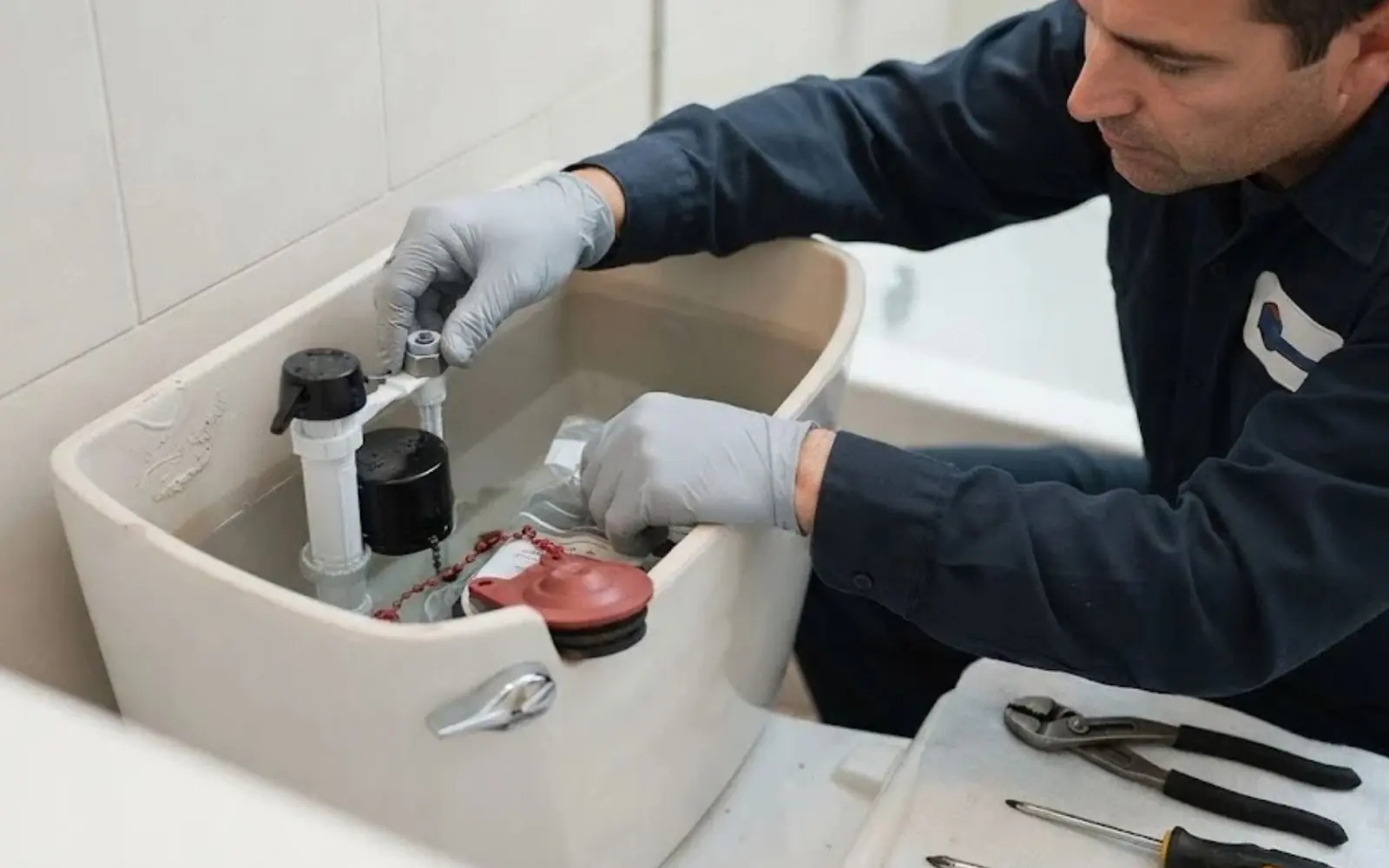
A toilet has two jobs: refill the tank to a set level, then release that water through the bowl in one fast surge. The refill side depends on the fill valve and float. The release side depends on the flapper, the chain, the flush lever and the rim jets under the bowl lip.
A running toilet is almost always a flapper that no longer seals, or a chain that is too tight or too slack. A phantom refill every few minutes means water is slipping past the flapper into the bowl. A hissing tank usually points to a fill valve that cannot shut off cleanly.
The base is a different system. A wax ring or foam gasket seals the closet flange on the floor to the horn of the bowl. When the bowl rocks even slightly, that seal breaks, and water seeps out only during a flush, so the damage hides under vinyl or tile for weeks.
Overflowing toilet: what to do first.
Stop the inflow before anything else. Reach behind the toilet and close the small oval supply stop clockwise. If it will not turn, remove the tank lid and lift the float arm or press the flapper into its seat to cut the refill.
Do not flush again, and do not plunge a bowl that is already full to the rim. If water has reached outlets, baseboards or a wall below, keep people away from wet electrical areas and shut power off at the panel only if the panel is dry and you can reach it safely.
Call right away if the toilet backs up when you run a sink or shower, because that suggests a blocked drain line, not a bowl problem. Late-night overflows and weekend failures get the same 24/7 dispatch, with same-day appointments when available for calmer jobs like a slow leak at the base.
How a toilet repair is carried out.
The plumber begins with the water: supply stop, braided connector, tank bolts and tank-to-bowl gasket are all checked for drips with dry tissue. Then the tank is opened, the flapper and fill valve are tested, and dye tablets show whether water is leaking into the bowl.
Fixing the base means draining the tank, disconnecting the supply, unbolting the bowl and lifting it clear. The old wax is scraped off the flange, the flange is checked for cracks or a loose mount, and the bowl is reset on new wax or a gasket with fresh closet bolts. A flange sitting below the finished floor may need a spacer ring.
A bowl that backs up or gurgles is a drain problem, so the work moves to the line. That is where clearing the drain line with a cable or auger comes in, since no amount of tank work will help a blocked branch.
Stop the water at the wall, then call (385) 488-1892 and a licensed plumber will talk you through what to expect next.
Call (385) 488-1892Toilet symptoms, likely causes and what gets checked.
Use this as a quick decision aid before you call. It does not replace a visit, but it helps you describe the problem clearly.
| What you see | Likely cause | What the plumber checks | Typical fix path. |
|---|---|---|---|
| Tank refills every few minutes | Flapper not sealing | Dye test, chain slack, flapper age | New flapper or full flush kit. |
| Hissing or constant fill | Worn fill valve or float | Water level against overflow tube | Replace fill valve, reset float. |
| Water around the base after flushing | Failed wax ring or loose bowl | Rock test, closet bolts, flange height | Reset bowl on new wax or gasket. |
| Drip at the wall under the tank | Supply stop or connector leak | Packing nut, compression nut, braided line | Tighten, rebuild or replace the stop and line. |
| Weak or incomplete flush | Clogged rim jets or low tank level | Jet holes, siphon, tank water line | Descale jets, adjust level, or snake the trap. |
| Bowl rises, gurgles, or drains elsewhere back up | Blocked branch or main drain | Other fixtures, cleanout access | Cable the line, then retest the toilet. |
Bidet seats and wand attachments add a tee on the supply line. Leaks there usually come from a cracked plastic adapter, and the repair is a new adapter, not a new toilet.
Why older Orem homes run into stuck valves and tired seals.
Orem grew from 18,394 residents in 1960 to 52,399 in 1980, so a large share of its homes were built in that window.
If your home is from that era, the supply stop and tank hardware may be original. A running toilet can waste a large volume of water over a day. A stop valve that has not been turned in decades often drips at the stem the first time you close it, so ask the plumber to replace it during the visit instead of hoping it holds.
Orem uses a tiered, increasing rate structure for culinary water, adopted in 2016. A silent leak from a flapper adds up on every bill, which is why a running toilet deserves a prompt repair even when it looks harmless.
Orem draws from wells, springs and Provo River water, so water chemistry can shift by season and neighborhood. Mineral scale can clog rim jets and foul fill valve seats, which is one reason a slow-fill complaint can return after a cheap part swap.
What shapes the cost of a toilet repair.
A flapper swap and a full toilet replacement are very different jobs, so the number depends on the work found. You get a clear price before work starts.
Parts versus fixture
A flush kit or fill valve is a small parts job. A cracked bowl or tank means a new fixture, and the model you choose changes the total.
Condition of the flange
A broken or low flange adds repair parts and time. A sound flange keeps the visit short.
Supply stop and connector age
A seized or leaking stop valve is replaced before the toilet is reconnected. That adds a part and a shutoff to the visit.
Drain blockage
If the problem is in the line, cabling or augering becomes the main task, and the time depends on how deep the blockage sits.
Timing of the call
A late-night or weekend dispatch is billed differently from a scheduled daytime visit, and the plumber tells you how before work begins.
Homeowners policies typically cover sudden and accidental water damage, such as a supply line that bursts and floods a floor. They typically do not cover gradual leaks from a worn wax ring or long-running seepage, so check your own policy for the details.
The only reliable number comes from someone looking at your toilet. Call (385) 488-1892 and describe what you see, and the plumber will explain the likely scope before any work begins.
Gather this before you call about a toilet.
A few minutes of observation saves diagnostic time and helps the plumber bring the right parts.
- Note whether the leak shows during a flush, between flushes or only when the tank refills.
- Press on the bowl gently from the side to see if it rocks, and note whether the floor feels soft nearby.
- Look for the make and age on the tank lid or inside the tank, which helps match a flush kit.
- Find the manufacture stamp inside the tank if you plan a replacement, and measure the distance from the wall to the closet bolts (the rough-in).
- Check whether other drains in the house are slow, since that points to the line and not the fixture.
- Take photos of any water staining on the ceiling below, then shut the supply stop and leave it closed.
Toilet Repair & Installation questions from Orem homeowners
Yes. Dispatch runs 24/7, so an overflowing bowl at 2 a.m. or a leak on a holiday weekend gets the same call-in process as a weekday job. Close the supply stop first, then call (385) 488-1892 for same-day or after-hours scheduling when available. Dispatch also covers Pleasant Grove, with the same process.
Water is slipping past the flapper into the bowl, which drops the tank level and triggers a refill. A worn flapper or a bent chain is the usual cause, and the dye test confirms it quickly.
The task itself is simple, but a heavy bowl, a brittle flange and cast iron or corroded hardware can turn a one-hour job into a bad afternoon. If the flange is cracked or the floor is soft, stop and call.
Plumbing work in Orem is governed by the 2021 International Plumbing Code (IPC) as adopted by the city with Utah amendments. Whether your swap needs a permit depends on the job, so check with the Orem Building Safety Division or raise it on the call.
Orem's water comes from wells, springs and Provo River treatment, and chemistry varies by season and location. Scale can build up in rim jets and around the fill valve seat, so a descale or a part swap may be part of a repair.
Probably not. When one fixture reacts to another, the shared drain is partly blocked, and a cable or auger on the branch line is the next step. The toilet itself is usually fine.
Yes. Installation includes disconnecting and hauling away the old fixture, checking the flange, setting the new bowl on a fresh seal and testing the flush. Ask about swapping to a different height or bidet seat when you call. Larger jobs, such as relocating a toilet during a remodel, belong with planned plumbing installation work.
Sources and references
- Orem census counts 1960 and 1980 (U.S. Decennial Census figures as tabulated on Wikipedia).
- City of Orem Water Conservation Plan, October 2022, conservewater.utah.gov (source mix, tiered rates adopted 2016).
- Orem adopted codes list, orem.org (2021 IPC with Utah amendments), and Orem Building Safety Division permit page.