
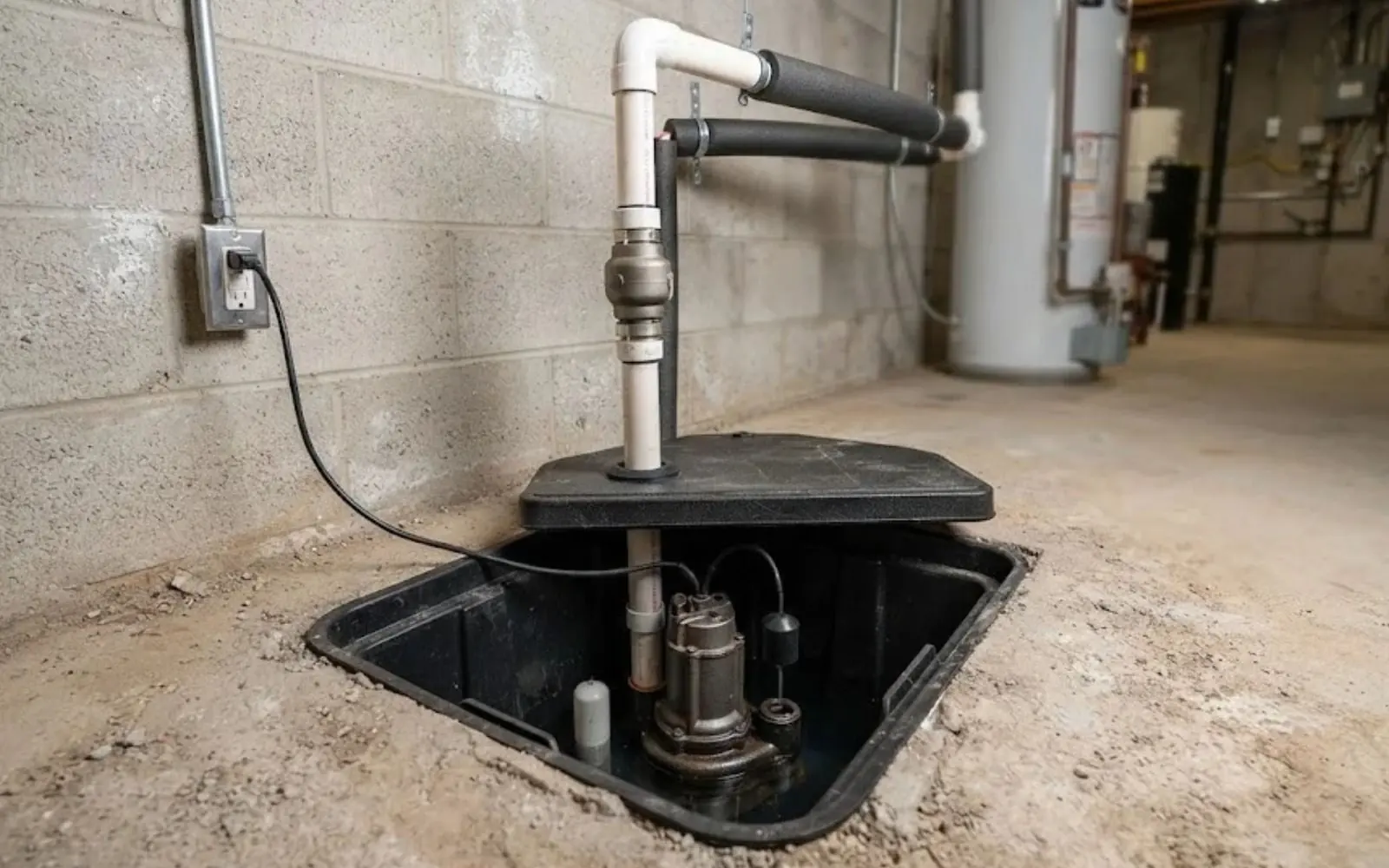
A dual sump pump system puts a second pump in the same pit, or a second pit, so one failure does not flood the basement. For a home in Orem, UT with a finished lower level, that spare can be the difference between a nuisance and a ruined floor.
If your sump pit is filling right now and the pump is silent or humming, move valuables off the floor, keep people away from standing water near outlets, and call for 24/7 dispatch. Same-day appointments are available when possible.
What a dual system actually is.
The usual layout has a primary pump set at the pit floor and a backup pump mounted a bit higher. The primary switches on first as the water rises. If it fails or cannot keep up, water climbs to the backup float and the second pump starts.
Two pumps on one circuit do not protect you from a power outage. That is why backups are often paired with a battery system or a water-powered unit, and why a high-water alarm is worth adding. The pump is only one part of a working system.
Types of backup compared.
Each approach covers a different failure. Pick the one that matches how your pump is most likely to let you down.
| Backup type | Protects against | Limits to ask about. |
|---|---|---|
| Second electric pump, same circuit | Primary pump motor or float failure | Does nothing in a power outage or tripped breaker. |
| Battery-powered backup pump | Power outage and primary failure | Battery needs testing and replacing, finite run time. |
| Water-powered backup pump | Power outage, no battery to maintain | Needs adequate municipal water pressure, uses extra water. |
| Second pit with its own pump | Pit clogged or overwhelmed | More excavation and more cost. |
| High-water alarm only | Warning, not protection | Someone has to be home to hear it. |
Ask the installer which failure is most likely at your house, then choose the backup that addresses it.
Orem, UT: shallow groundwater and a storm that overwhelmed drains
Utah Geological Survey guidance says shallow groundwater is generally within 10 feet of the surface, is more likely in low valley areas and near rivers, streams, and lakes, and can flood basements. The western, lower-lying parts of Orem sit in a valley near Utah Lake, so a pit that fills in spring and after storms is plausible. The same guidance says to inspect and maintain sump pumps annually in winter, before the groundwater season.
In August 2024, Orem's public works director described a rainstorm of about one inch in roughly 30 minutes as greater than a 100 year storm event. The storm drainage system was overwhelmed. A surge like that is a reminder to test the pit pump before storm season, since it may have sat idle for months. A backup pump adds capacity inside the pit, but it does nothing for water that is overwhelming the street or the storm drain.
Homes in American Fork and Vineyard can ask the same questions. The state guidance also notes that standard homeowners insurance does not cover groundwater flooding.
The parts that decide whether two pumps work together.
Each pump needs its own check valve, a one-way valve on the discharge line that stops pumped water from flowing back into the pit. Without one, the running pump pushes water out and the idle pump just lets it return, so the pit cycles uselessly. Each pump also needs its own float, set so they do not interfere.
The discharge line is the shared path outdoors. If both pumps feed one pipe, the pipe needs to handle the flow and ends where water runs away from the foundation instead of back toward it. A frozen or buried outlet is the usual reason a good pump still floods a basement. If you notice water pooling around the outlet in winter, call for a sump pump repair visit before the next storm.
Where the discharge ends is also a code and permit question. Sump discharge is generally kept out of the sanitary sewer, so ask the Orem Building Safety Division where yours may end before any pipe is run, and ask the installer to write the answer into the quote. Pump size follows how fast the pit fills and how high the water must be lifted, so ask the installer what flow rate and lift height they are designing for.
If your sump pit is rising, call now and describe whether the pump is humming or silent.
Call (385) 488-1892.What to do before the electrician or plumber arrives.
A basement with a failing sump pump is a wet, electrical hazard. Work through these steps first.
- Stay out of standing water if any outlet or cord is in it.
- Unplug the pump only if the outlet is dry and you can reach it without stepping into water.
- Check that the discharge pipe outside is clear of ice, leaves and a kinked hose.
- Pour a bucket of water into the pit to see whether the float lifts and the pump starts.
- Note the pump brand, the age and whether it is on a dedicated circuit.
- Photograph any water damage before you move belongings, for an insurance claim.
What a second pump cannot fix.
A backup pump moves water that reaches the pit. It does not stop water from seeping through a cracked wall, a failed window well, or a grade that slopes toward the house. If water comes in elsewhere, a second pump just gives you more pumping.
A plumber installs and repairs pumps, pits, and discharge lines. Foundation cracks, exterior drainage, and excavation belong to other trades, and an honest basement waterproofing discussion separates the two. Ask the contractor what the pump will and will not handle.
What to ask for in a dual pump quote.
- Whether each pump has its own check valve, float, and discharge connection.
- Whether the backup runs on battery, water pressure, or the same circuit.
- The pit size, and whether the existing pit can hold two pumps without crowding them.
- Where the discharge ends and how it avoids freezing or draining toward the house.
- Whether a high-water alarm is included and where it sounds.
- Who handles the permit questions, since rules vary by job.
What changes the cost of the job.
The total moves with the number of pumps, the backup type, whether a new pit is dug, how much discharge pipe is needed, and electrical work for a dedicated circuit. A second pump in an existing pit is a smaller job than a second pit in a finished basement slab.
Compare quotes by listing each component. If one quote includes a battery and alarm and the other does not, the totals are not comparable. Ask for a clear price before work starts and what the warranty on parts covers.
Insurance and what it usually covers.
A sump failure sits in an awkward spot for claims. Policies usually respond to sudden and accidental events, and they typically exclude gradual leaks, wear, and groundwater flooding. Some insurers sell a water backup endorsement, so check your own policy and ask your agent what it says.
Common questions
Not every home does. A second pump makes sense when a flood would damage finished space, when the primary has failed before, or when storms are intense. A plumber can tell you whether your pit and discharge suit a pair.
Only if it does not rely on household power. A battery or water-powered backup can run in an outage, while a second pump on the same circuit cannot. Ask which type is being quoted.
A silent pump with a rising pit is urgent, and dispatch is available 24/7 including nights and weekends. Same-day appointments are available when possible.
Utah Geological Survey guidance recommends inspecting and maintaining sump pumps annually in winter, before shallow groundwater typically becomes a problem. Pour water into the pit and watch the float raise and the pump clear it.
It showed that a heavy burst can overwhelm storm drains. A backup pump will not stop surface flooding, but it does give a pit more capacity when the water table and the storm drain are both under strain.
Sources and references
- Utah Geological Survey, Public Information Series 105 (2023), Shallow Groundwater Hazard in Utah, geology.utah.gov.
- Fox 13 Salt Lake City, August 14, 2024, coverage of Orem's rainstorm and detention basins.
- General backup pump types described as common trade practice, no equipment or code claims.